
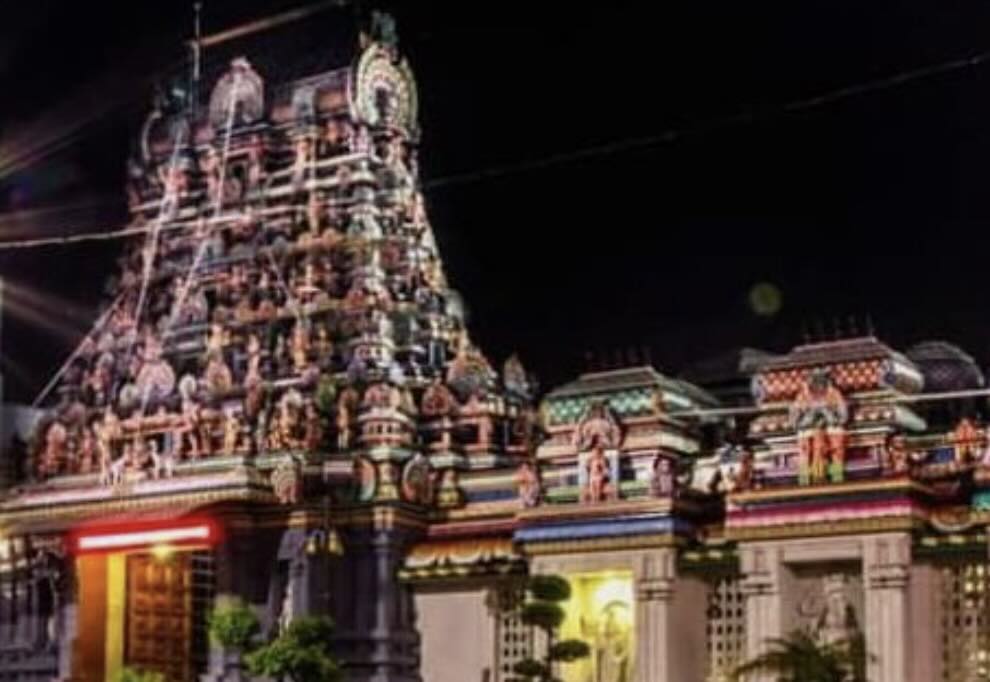
If you’ve walked along Jalan Yam Tuan in Seremban — the street many still remember as Paul Street — you’ve probably passed the Sri Balathandayuthapani Temple without realising the depth of history and culture contained within its walls. It is a living archive of the city’s Indian heritage, a centre for community life, and a monument to endurance through changing times.
From modest beginnings
The story of the temple begins in the late 19th century, when Seremban was still a bustling tin-mining settlement and Paul Street was at the heart of commercial activity. The first form of the temple was nothing grand — a simple zinc-roofed structure built in the 1870s. It served the spiritual needs of early Indian labourers, many of whom were brought to the region to work on the railway line from Seremban to Port Dickson. For these workers, far from home, this modest shrine offered familiarity, comfort, and continuity with their traditions.
As the local Indian community grew, so did the temple. In 1893, it was rebuilt with more permanent materials: brick, concrete, and tiles. This change marked a shift from a temporary shelter for worship to a lasting landmark for generations to come.
A vision that shaped the temple
The most well-known story of the temple’s origin dates to 1899, when a philanthropist named Nacchappan Chettiar had a divine vision. According to tradition, he saw a young boy playing with a peacock — a powerful image associated with Lord Murugan, or Thandayuthapani, the Hindu god of war and wisdom. Convinced of the vision’s significance, Nacchappan purchased the land and installed a ‘Vel’ — the spear symbol of Murugan — as the temple’s central object of devotion.
This vision is more than a romantic tale; it is a reminder of the deep, personal faith that has sustained the temple for over a century. Many devotees believe that the temple retains a special spiritual energy linked to that first encounter.
Distinctive architecture
The Sri Balathandayuthapani Temple is a striking example of Dravidian-style architecture, the classical temple design of South India. The gopuram — the ornate, tower-like entrance — is covered with finely sculpted figures of Hindu deities, saints, and mythological beings. Every detail of the gopuram is symbolic, representing layers of spiritual teaching and cultural heritage.
Step inside, and the vibrant colours, carved pillars, and detailed shrine work create an atmosphere both festive and sacred. Even if you’re not a practising Hindu, the artistry is worth pausing to admire.
The golden chariot
One of the temple’s most celebrated treasures is its Thanga Ratham, or golden chariot. Claimed to be the largest of its kind dedicated to Lord Thandayuthapani in Malaysia, the chariot is built on a teakwood frame and sheathed in copper plates. Over this, about 2.5 kilograms of gold has been carefully applied. It is a masterpiece of craftsmanship, and when it makes its ceremonial procession during festivals, the sight draws crowds from across the state.
The golden chariot isn’t just for display; it symbolises the community’s devotion and the collective effort that has sustained the temple over decades.
A hub of festivals and rituals
Like many Murugan temples, Sri Balathandayuthapani Temple comes alive during Thaipusam, when devotees undertake vows, carry kavadis, and join processions in honour of the deity. The temple also celebrates Aadi Velli, Navarathri, Skanda Shasti, and a host of other religious observances.
Daily poojas (ritual offerings) maintain the rhythm of worship, and the temple priests preserve traditions that have been passed down for generations. These rituals are as much about cultural continuity as they are about religious devotion.
A landmark in Negeri Sembilan’s temple network
Sri Balathandayuthapani Temple is officially recognised among Negeri Sembilan’s significant Hindu temples. Its position in the state’s spiritual landscape is matched by its role in the everyday lives of Seremban residents, from marking life milestones to offering a place of solace during difficult times.
While it has no standalone official website, the temple’s Facebook page is regularly updated with event schedules, announcements, and photos. You can also find a brief profile on temple-indian.my.
 Parimala
Leave a comment